
Begin with the Body
Theory of Change, Identity, and Rewiring the Body

Since launching Curious Embers a few months ago, I’ve been asking myself a simple but unsettling question: where does real change actually begin?
One of my favorite early topics in public policy education was the Theory of Change framework: start with the end in mind, then work backward to identify the preconditions, actions, and supports that would make the goal possible. It’s a deceptively simple tool, but a powerful one.
Evaluation through a Theory of Change framework forces us to name the hidden assumptions that so often go unexamined. It reveals whether our actions are truly aligned with the outcomes we hope for, or whether there are missing conditions we need to put in place first. It also provides a way to measure progress that is grounded in a clear chain of cause and effect, rather than wishful thinking that can sometimes have well-intentioned yet unintended negative consequences.
As I deepen my practice with clients, I realize this framework isn’t just useful for policymakers designing programs — it’s just as powerful for guiding personal growth and transformation.
At its simplest, here’s the theory of change I keep returning to:
Body → Identity → Society.
If we want to shape a more just and connected world, we need to be intentional with the identities we carry. But if we want to shift those identities — from the “I’m not enough,” the “I should play it safe”, the “I’m just one person, what could I possibly change?” — we can’t just think or will our way there. We need to set the right preconditions first.
And that begins, quite literally, with the body.
Why the body comes first
We often assume that change begins with the mind. Self-help culture doubles down: “just shift your mindset”, “think positive”, “fake it till you make it”.
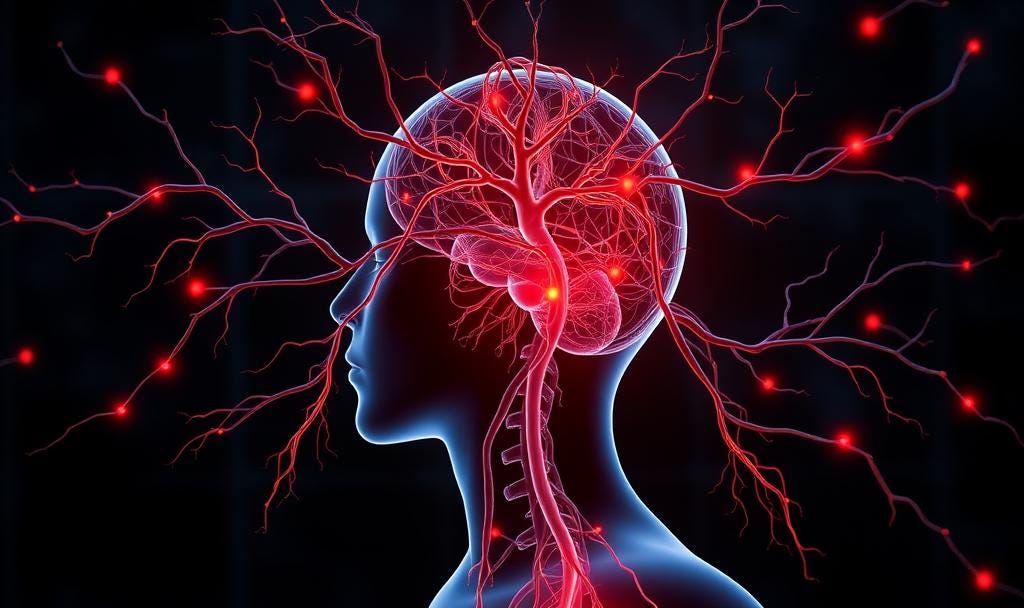
But here’s the rub: our mind itself is downstream of our physiology.
The limbic system — the amygdala, hypothalamus, hippocampus — regulates survival, emotion, arousal, and safety. It processes sensory input before our conscious mind even catches up.
In that way, our nervous system is less a passenger and more the driver of what we believe, what we feel capable of, and ultimately, who we think we are.
This insight came alive for me during a conversation between Oren Shai and Elisabeth Kristof in the Working With Feeling podcast. Together, they named something that I had felt but never had language for: in a dysregulating world, tending to the nervous system isn’t just a wellness practice– it’s a prerequisite for transformation.
Inspired, I attended a workshop with Elisabeth and the team at Neurosomatic Intelligence. Right at the start, Elisabeth dropped a question that flipped the script:
What if change doesn’t begin with mindset at all? What if we must first regulate the nervous system - rewiring the body - before a mindset shift can take root?
That landed like a lightning bolt.
Because if our nervous system is dysregulated, our identities calcify around fear, scarcity, and self-protection. And honestly, who truly has a regulated nervous system these days?
But the inverse can also be true: when the body feels safe, new identities can emerge. Courage feels possible. Self-trust has room to breathe. Our best selves can be cultivated in more fertile and nourishing ground.
Identity: the “what” we are changing
This brings us to the second step in the chain: Identity.
Identity isn’t just a label or a role we play. It’s the web of stories we tell ourselves about who we are, what’s possible for us, and how we belong in the world. Some of these stories empower us. Others quietly limit us.
When our nervous system is stuck in protection mode, those limiting identities take root: the careful one, the anxious one, the one who can’t risk too much.
But when the body feels regulated and safe, new possibilities open up. We can try on identities that once felt out of reach: the grounded leader, the creative voice, the person who speaks with clarity and acts with courage.
In other words: If identity is the “what” we are changing, then the body is the “how.” Our nervous system becomes a portal to walk through – a collaborator with whom to create our best self rather than the shackles that tether us to limited thinking.
Transformation becomes less about forcing ourselves into a new mindset, and more about providing our bodies with the conditions that allow new identities to grow. We cultivate our personal and collective futures with intention and, dare I say, love.
Society as Collective Nervous System
Just as a single body can be dysregulated, so too can an entire society. Fear, scarcity, and reactivity become contagious at scale. But the inverse is also true: when more of us inhabit identities rooted in safety and courage, we help regulate the collective.
Identity doesn’t stop with us. The identities we carry ripple outward into our families, our workplaces, and our communities. When we shift how we show up, the texture of our relationships shifts too. Small acts of nervous-system regulation and grounded presence accumulate into cultural shifts: teams feel safer, conversations deepen, and societies become just a little more humane.
Society is, in many ways, a network of nervous systems in relationship. Society changes because individuals practice being different together.
Healing ourselves is never only personal - it’s the groundwork for collective transformation.
Practice: How do we begin?

If transformation really does begin with the body, then the question becomes: how do we begin? This is how I see the cause and effect framing from Theory of Change becoming very helpful: through this approach, we can focus on where we can have the most influence with the quickest actions.
I’d like to offer two options to get started, one simple, one more advanced:
Simple - Just 3 Breaths
Take three slow breaths in and out through the nostrils, but with full attention to your exhale.
Let it be longer than the inhale.
This cues the vagus nerve and signals safety to the nervous system.
Why it works: Breath is a unique function of the body because it can be both consciously controlled and functions autonomously without conscious attention. It can be a gateway to the nervous system because a longer exhale is a signal to our nervous system that we are in a safe space - and can move out of Fight or Flight activation.
Interested in learning more? Check out Science of Breath
Advanced - Try a Body Scan
Think of your attention as a flashlight and slowly move that flashlight up the body, starting at your toes and moving upward.
Notice sensation without judgment.
If you find tension, pause there. Soften. Breathe.
This practice gradually retrains the nervous system to tolerate stillness and presence.
Why it works: You’re tapping into an important sense called “interoception”, the ability to feel your body’s physiological state. This creates a sense of deep presence and is a muscle we should all strive to build while healing our overly taxed nervous systems.

Neither of these practices is flashy - but that’s also part of the point. They are accessible to you at nearly any moment of the day, and are powerful in helping create the preconditions for identity change when practiced frequently. I like to think of this as preheating the oven before baking the cookies of an improved identity.
Exercises in healing your nervous system can create the grounding from which new stories about yourself (and the world) can actually take hold.
What’s Ahead
This only scratches the surface of what I’m hoping to explore with Curious Embers. My hope is that future pieces will take us deeper into other topics around this that are equally important like:
Identity prototyping: how small experiments help us step into new selves.
Collective transformation: how Body → Identity → Society scales from the personal to the systemic.
Psychological safety: why it’s the missing condition in so much of our work and leadership.
Let me know in the comments if there are particular areas you’d like us to explore.
For today, the invitation is simple: begin with the body. Maybe that’s just breathing, maybe it’s taking on a deepening Yoga practice. But healing our nervous system is a necessary Step 1 before we can live into the best versions of ourselves.
Feeling called to explore working together directly? Fill out this short intake form to share what’s emerging for you
Thank you for being here.
With warmth,
Miguel ❤️🔥
“Society changes because individuals practice being different together.” Yes. I am here for it!
I truly believe regulating the body first assists in regulating the mind. I have survived SA at the hands of men and regulating my nervous system has allowed me to have more meaningful talk therapy sessions and better relationships with men. I'm able to unpack traumatic things because my body is ready to handle it. Calming the nervous system is helping me recover from PTSD as well. EMDR therapy has been very helpful. Great post.